Inside the Aston-led initiative helping local businesses build teal AI adoption roadmaps
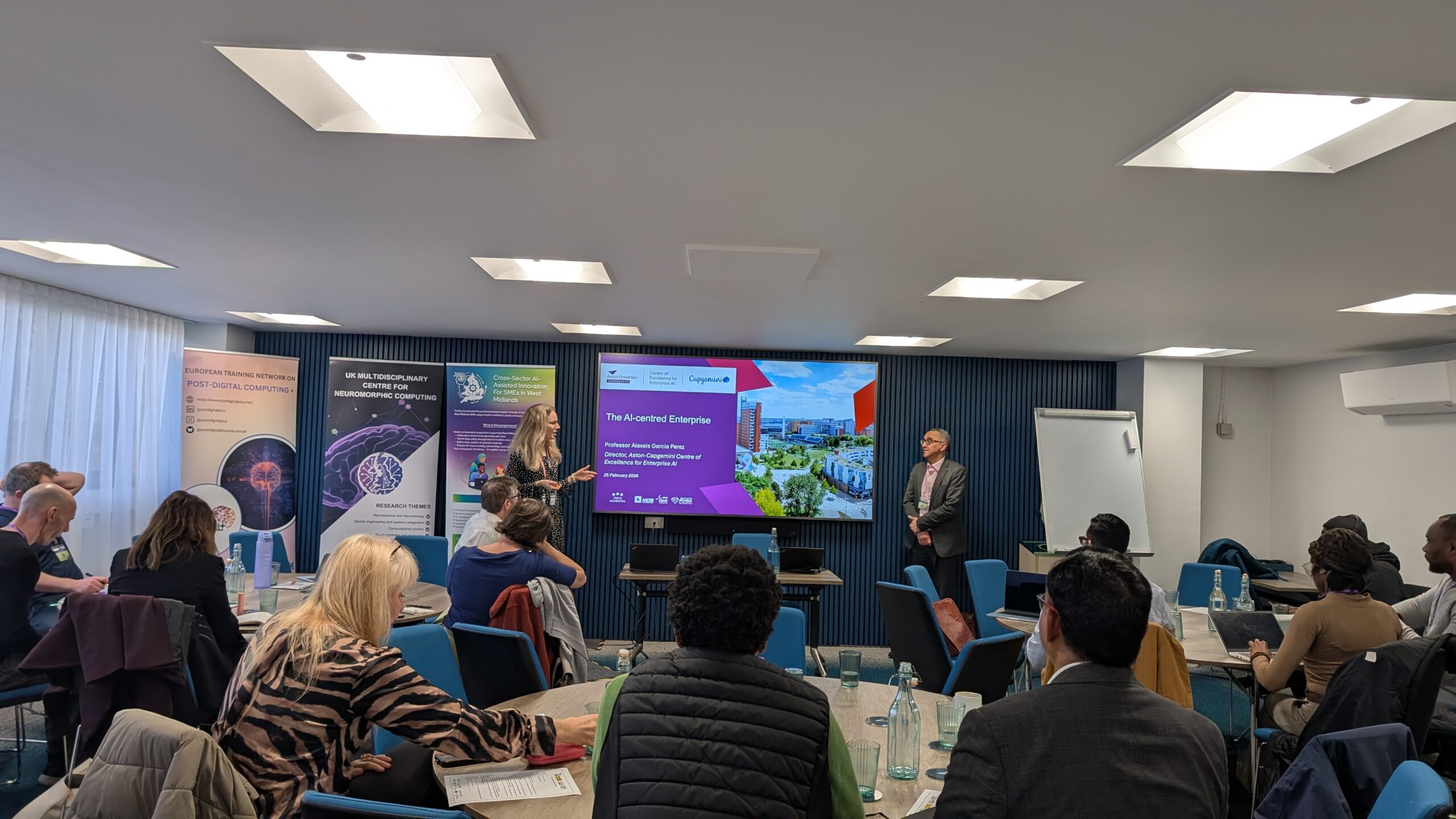
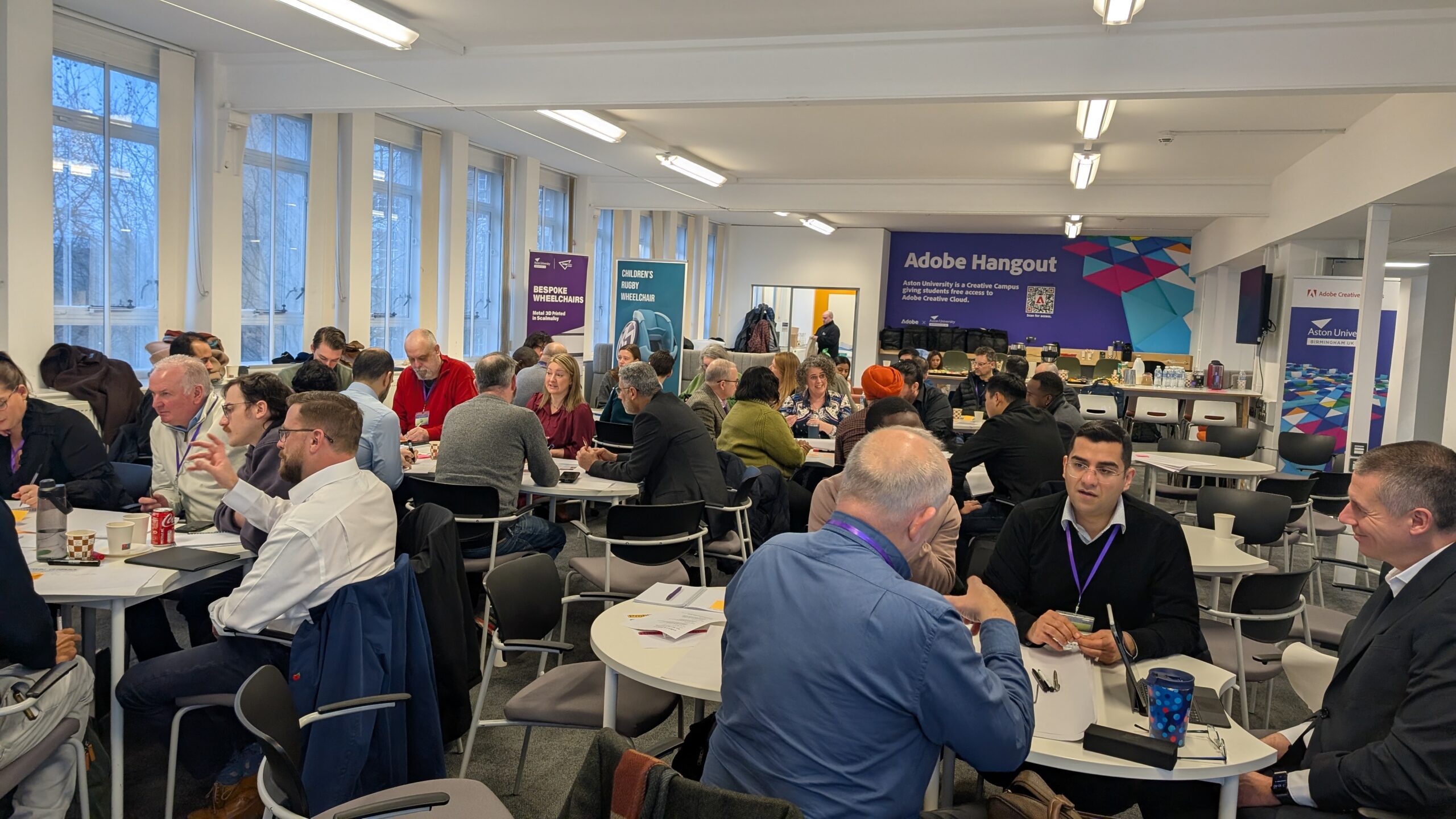
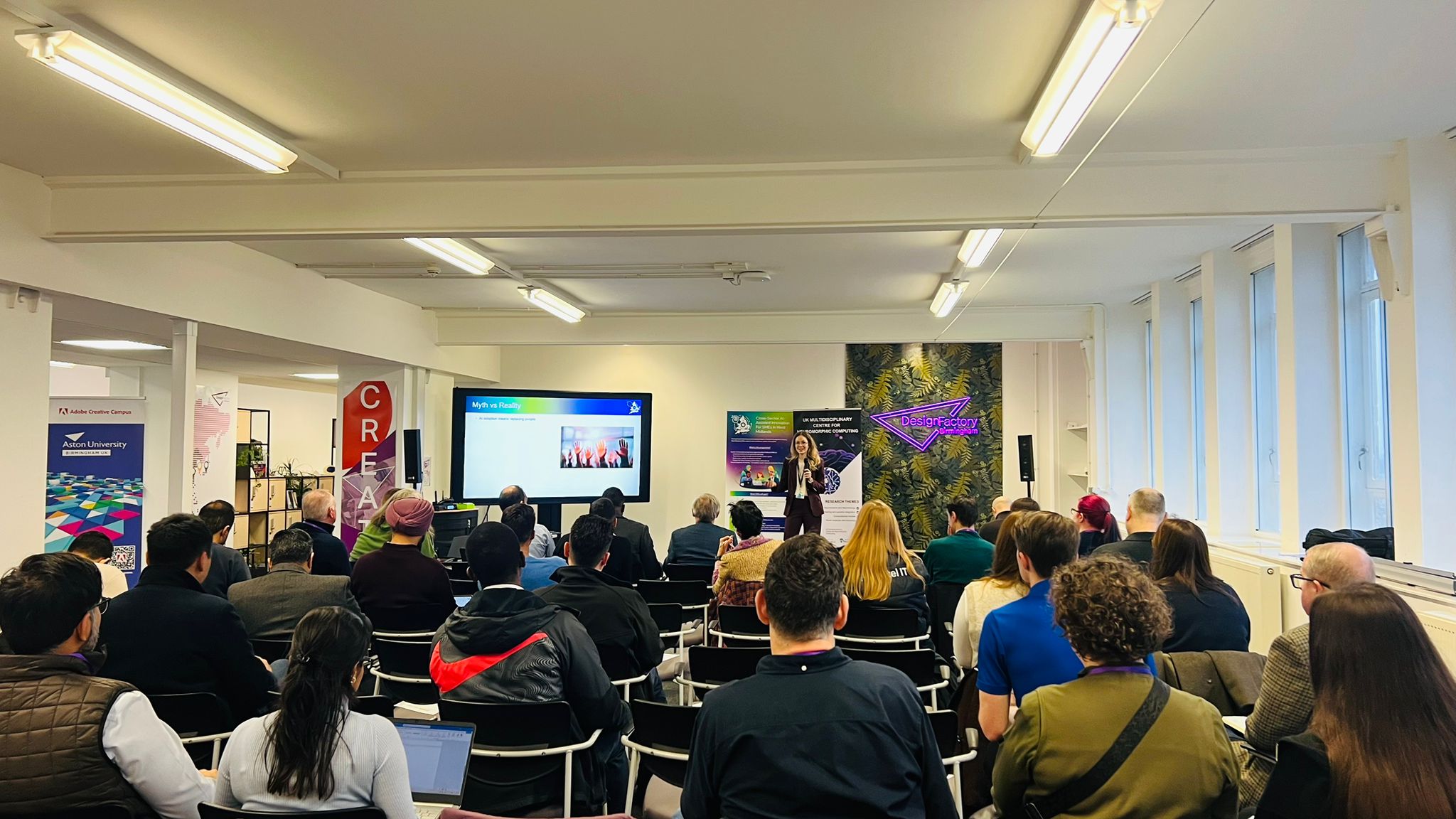
More than 70 businesses from manufacturing, health technology and digital sectors gathered at Aston University to explore how artificial intelligence can move from concept to practical implementation across the West Midlands economy.
Artificial intelligence is no longer a future concept for many small and medium-sized enterprises (SMEs) in the West Midlands. Across sectors including manufacturing, robotics, sustainability, digital technology and HealthTech, businesses are increasingly exploring how AI could improve productivity, efficiency and new product development.
However, recent regional workshops delivered at Aston University through the AI-Assisted Innovation for SMEs programme highlight that interest in AI does not automatically translate into implementation.
The initiative, led by Aston University’s Aston Institute of Photonic Technologies (AiPT) in collaboration with Technology Supply Chain and regional innovation partners, is designed to support SMEs in moving from early curiosity about AI towards structured experimentation and adoption.
Regional workshops bring businesses together
In period of October-March, programme organised 8 events, including two Innovation hand-on Workshops.
Participants included managing directors, founders, engineering leaders, operations managers, and digital transformation specialists from companies ranging from established manufacturers to fast-growing technology businesses.
The workshops formed part of a wider regional effort to strengthen the West Midlands innovation ecosystem by helping companies explore practical applications of emerging technologies.
Key challenges facing SMEs adopting AI
Discussions during the workshops revealed three common challenges businesses encounter when attempting to adopt AI technologies.
Moving from interest to application
Many SMEs recognise the potential value of AI but struggle to identify where it fits within existing operations. Businesses raised questions around selecting realistic use cases, understanding return on investment, and avoiding premature technology investment.
Integrating AI into existing systems
Participants highlighted technical and organisational barriers, including integrating AI tools with legacy machinery or enterprise systems, addressing workforce capability gaps, and ensuring that experimentation does not disrupt ongoing production processes. This challenge was particularly relevant for companies operating in regulated sectors such as HealthTech.
Developing a phased adoption strategy
SMEs emphasised the importance of implementing AI through a clear sequence of steps, starting with small, low-risk experiments before scaling to larger innovation projects. Businesses also highlighted the need for clearer visibility of funding opportunities and external expertise.
Turning discussion into practical innovation plans
A central component of the workshops was the development of practical AI adoption roadmaps for each participating company.
With support from researchers and innovation specialists, SMEs identified:
These roadmaps also helped companies identify potential routes to funding and technical collaboration.
Supporting implementation and innovation
Following the workshops, selected businesses will have the opportunity to participate in innovation micro-sprints, short collaborative projects with researchers from Aston University designed to test early AI solutions or develop proof-of-concept prototypes.
The programme also provides guidance on accessing wider innovation support mechanisms, including collaborative research programmes, Knowledge Transfer Partnerships and national innovation funding opportunities.
Building momentum for regional innovation
The workshops demonstrate strong cross-sector demand for practical AI adoption support across the West Midlands.
For many SMEs, the challenge is no longer understanding what artificial intelligence is, but identifying how to implement it effectively within existing operations.
By combining academic expertise, business engagement and structured innovation support, initiatives such as the AI-Assisted Innovation programme aim to strengthen the region’s capacity for applied AI innovation while supporting SMEs in taking their first practical steps toward implementation.
Web design Adventure