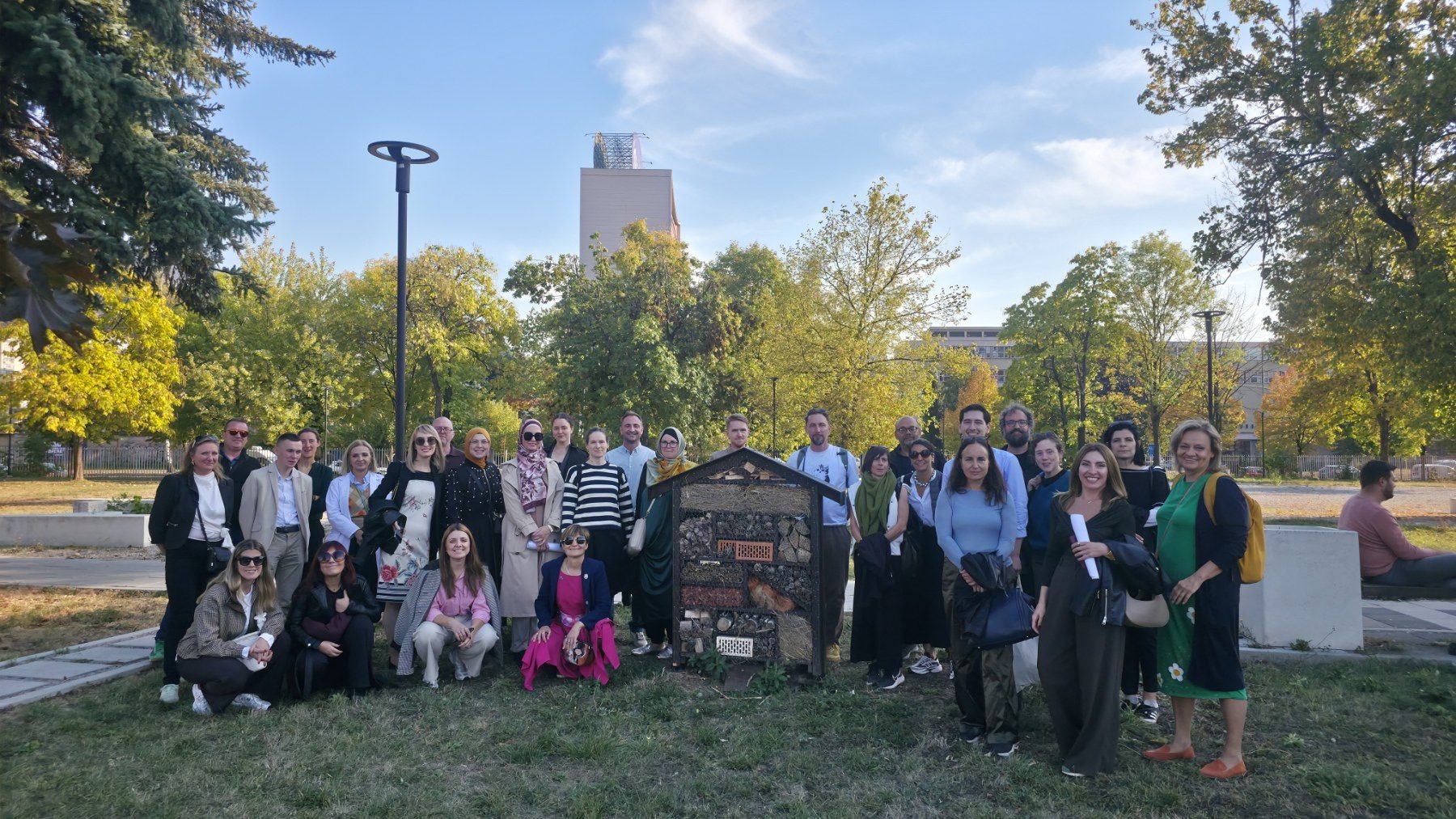
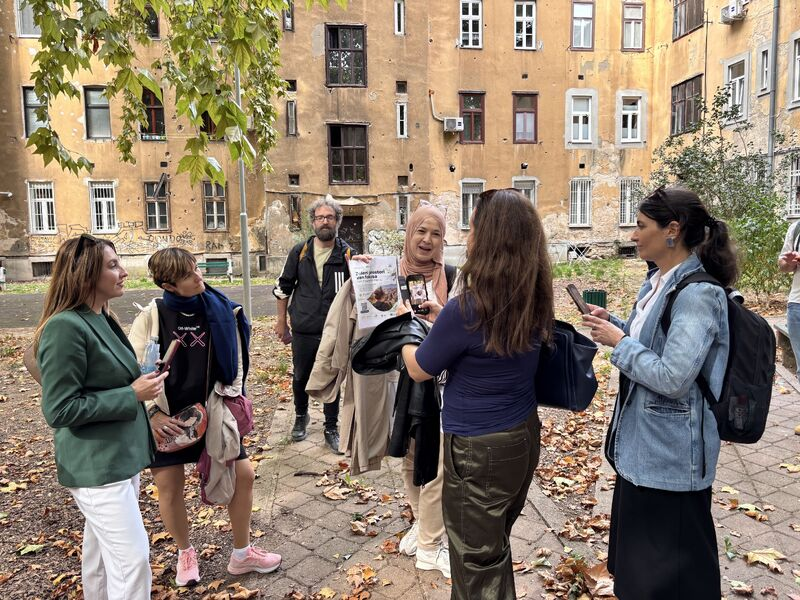
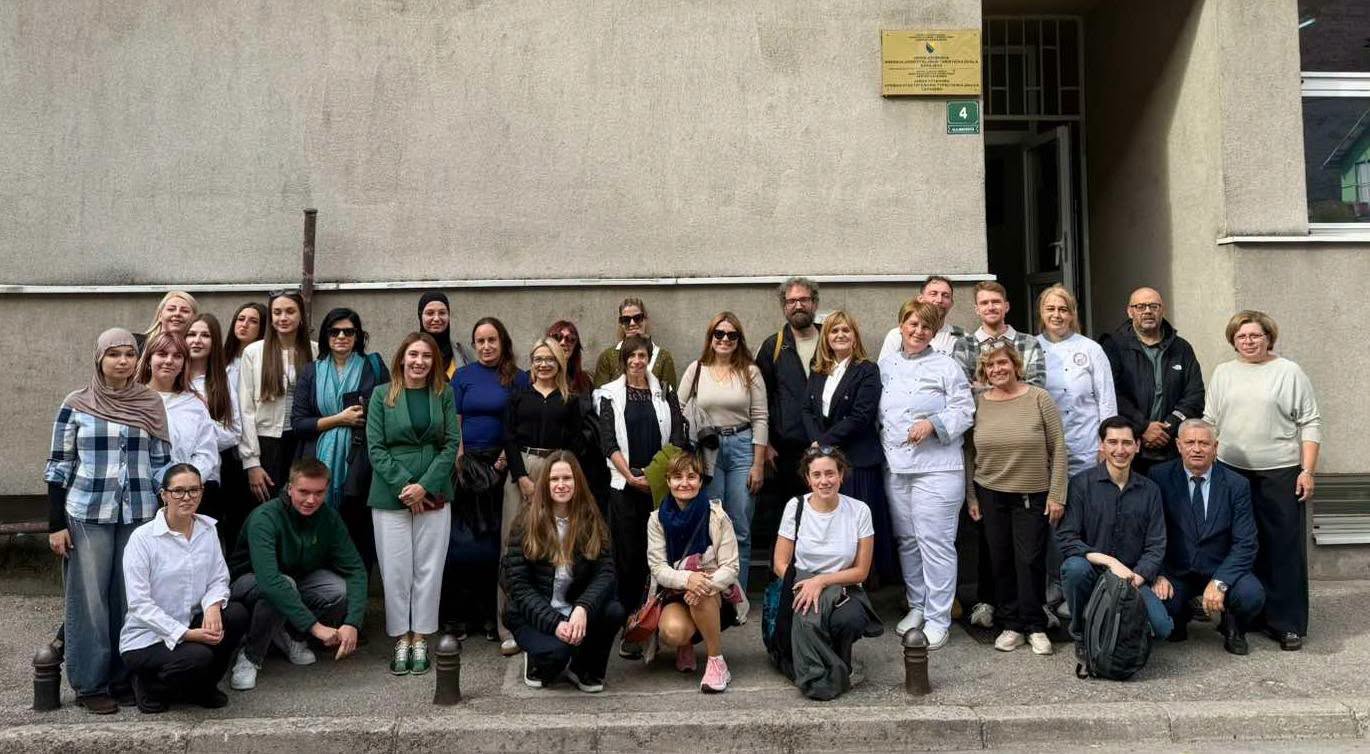
Birmingham City Council and the Greater Birmingham & West Midlands Brussels Office joined city and university partners across Europe in Sarajevo for a week of site visits, liking at how urban growing, food donation and shared green space can hold a community together.
From 6th to 8th October, partners in Bauhaus Bites met in Sarajevo, Bosnia and Herzegovina, at a learning session hosted by the City of Sarajevo and the University of Sarajevo. Bauhaus Bites is an EU-funded Horizon Europe project that applies New European Bauhaus principles to local food systems. Birmingham is one of the three trailblazer cities, delivering a pilot in East Birmingham. Colleagues from the Council’s Public Health and European and International Affairs teams took part.
Learning on site
Most of the learning happened outdoors, in school courtyards, community gardens and on university land. In Hrasno, a school garden with sensory planning, built for students with different abilities, sits near a healthy ageing centre where older residents and young people garden together. At the university campus, the group saw the Peace Circle, then the Faculty of Agriculture and Food Sciences’ experimental field and its seed gene bank.
Later came a school canteen trialling a biocomposter and Markale, the city’s open market. The Sarajevo Food Forest was next. It was planned for a public park but moved to a school courtyard after talks about long-term upkeep. The last stop was the Therapy Garden, a once-neglected courtyard reworked with residents and people in recovery from addiction.
Growing food when you have to
The Besieged Sarajevo exhibition at the Historical Museum added the historical context. It shows how residents managed daily life during the 1992-1995 siege, from finding good and water to coping without power and heating. During that period, people used almost every available plot in the city to grow food. A master’s thesis presented at the university picked up the same thread, looking at why people grow food in cities and how that changes with circumstances. Growing once meant getting enough to eat. Today it is more about wellbeing.
Hosts were open about the challenges. Interest tends to rise in difficult times and fade once they pass, as many cities saw after COVID-19 lockdowns. Keeping gardens respected by the neighbourhood, and dealing with the occasional damage to them, also took time. Sarajevo’s pilot work is partly about holding on to traditional know-how before it is lost.
Sarajevo has no food banks. The Goodwill Restaurant, a soup kitchen run by a local association, serves one warm meal a day to people in need. Questions over who is responsible for donated food close to its expiry date make some potential donors cautious. The United Nations Development Programme (UNDP) is supporting work to address this.
Courtyards inside housing blocks could be good green space, but they are private, and owners often resist opening them up. Many remain underutilised.
At the conference
On 7th October the group joined the 35th International Scientific-Expert Conference of Agriculture and Food Industry. Dominic Pender, Public Health Senior Programme Officer (Food) at Birmingham City Council, spoke on a panel on positive food environments with representatives from the five other cities in the project.
Dominic described food as part of culture, social inclusion and health, and said Birmingham’s approach starts with political commitment. The city already has a strategy for affordable healthy food. A local food system strategy comes next, along with a platform where local organisations can discuss and act. A strategy alone will not solve the challenges, so the team is also collecting evidence and experience, not just data. A call for community initiatives drew 18 organisations, with 10 selected, including an Eastern European cooking club. Work is also under way on a food literacy framework and open-access toolkits.
The other cities brought their own experience. Zagreb has run an urban gardens scheme since 2013 and is now designing a therapeutic garden with a rehabilitation centre and a school. Fundão is turning its municipal market into a food lab. In Oostende, a mobile kitchen idea stalled because nobody could take on running it. Palermo is working with a youth organisation on a plant-based bistro and gardening workshops. The advice that came up most was to listen first, map what already exists, choose partners carefully and build with communities rather than for them.
Web design Adventure