
Aston University’s Energy and Bioproducts Research Institute showcases how applied research can drive sustainable urban solutions across Europe
Tim Miller, Director of Engagement at Aston University’s Energy and Bioproducts Research Institute (EBRI), recently represented Birmingham at two influential sessions in Brussels focused on circular economy and knowledge valorisation.
Delivering circular economy results from research
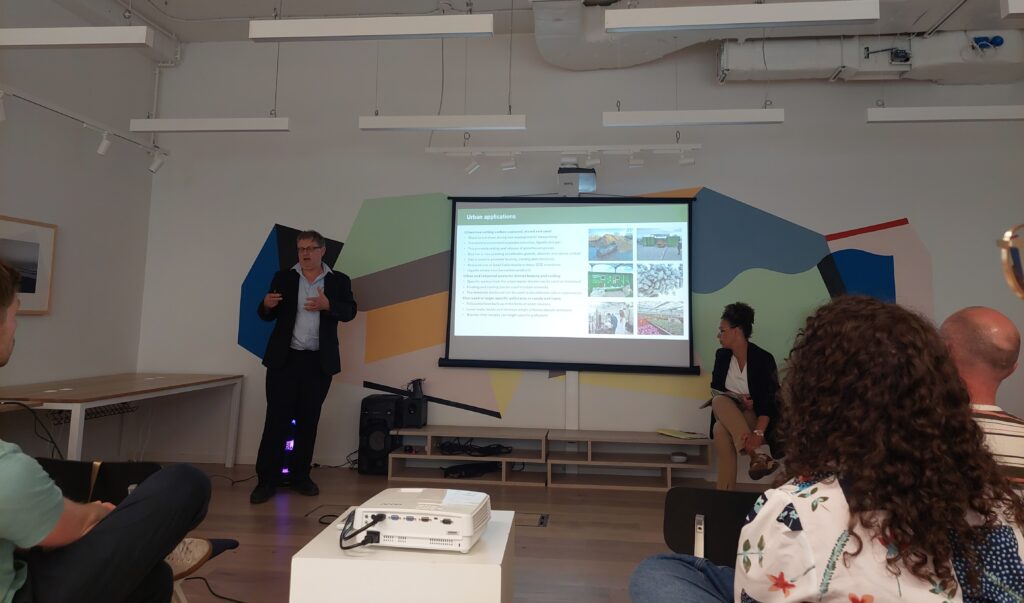
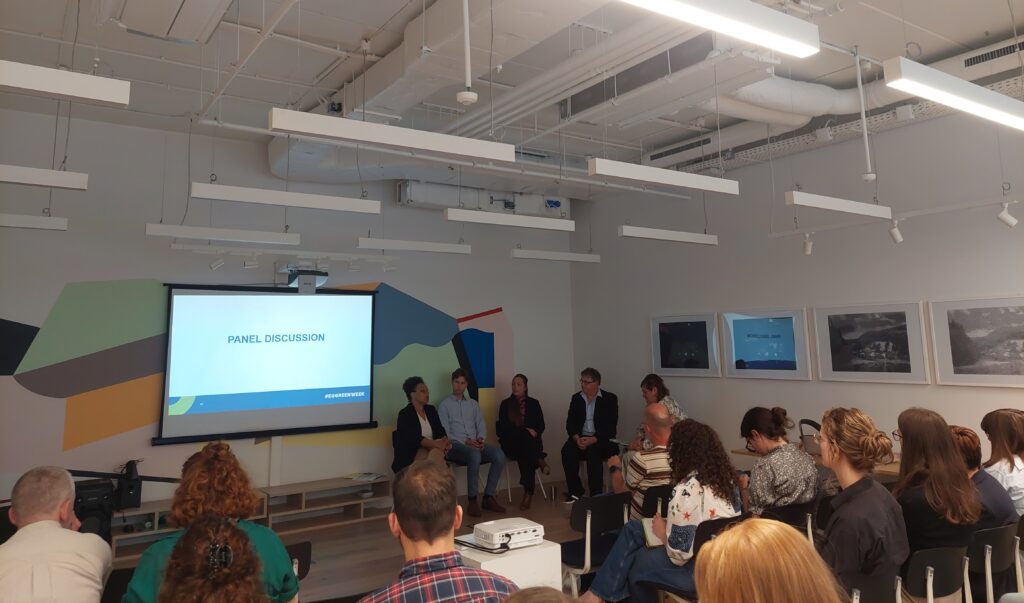
During the session titled “Innovative cities, circular solutions: Tackling urban waste challenges”, which was part of EU Green Week, Miller joined a panel of European city representatives from Goteborg, Lille Metropole and Assen to explore practical approaches to urban waste management. His presentation, “Delivering circular economy results from research”, showcased how EBRI is translating cutting-edge research into real-world applications that support environmental, social and economic goals at the same time.
Miller highlighted EBRI’s work with biochar, a carbon-rich material derived from biomass and waste, which is being used to capture and store carbon, enhance urban tree growth, and filter pollutants from waterways. He also discussed how urban and industrial waste can be repurposed to generate heat, electricity, and low-carbon products—demonstrating a model where economic success enables scalable environmental benefits.
“Cities are not just centres of consumption—they can also be hubs of innovation,” Miller remarked. “Our work at EBRI is about taking promising technologies out of the lab and placing them into real-world applications that support local economies and reduce emissions.”
Knowledge valorisation and regional innovation
In a separate session organised by UnILiON, Miller contributed to a discussion on knowledge valorisation. This session brought together EC officials informing the audience about the recently published Startup and Scale-up Strategy and the evolving Code of Practice for Knowledge Valorisation as well as research and innovation professionals from various European regions to share best practices and explore how knowledge can be effectively translated into societal and commercial impact.
Representing Aston University, Miller presented the Regional Clean Technology Accelerator, a programme that supports clean tech clusters across the West Midlands alongside the Open Innovation in Science Center from Aarhus University, Denmark. Whilst to two good practices apply quite different approaches to knowledge valorisation, they also share many similarities. Tim Miller and Marie Louise Conradsen shared experience in terms of their long-term goals, their challenges and their alignment with broader European objectives such as fostering innovation ecosystems, closing the innovation gap and enhancing competitiveness. Miller’s intervention focused on creating monetised economic value as well as environmental and societal value from research with industrial partners in a quite advanced and close-to-market phase of innovation. He, as well as Conradsen emphasised the need for cultural change and a different approach to rewarding researchers committed to creating economic and social value of their knowledge. We are proud to see how place-based research and innovation good practices from Birmingham continue nurturing European discussions on sustainable urban development.
As the EU prepares for the Circular Economy Act in 2026 giving room for locally anchored outstanding examples at international stage will ensure that cities remain at the heart of Europe’s transition to a more sustainable future.
Web design Adventure
