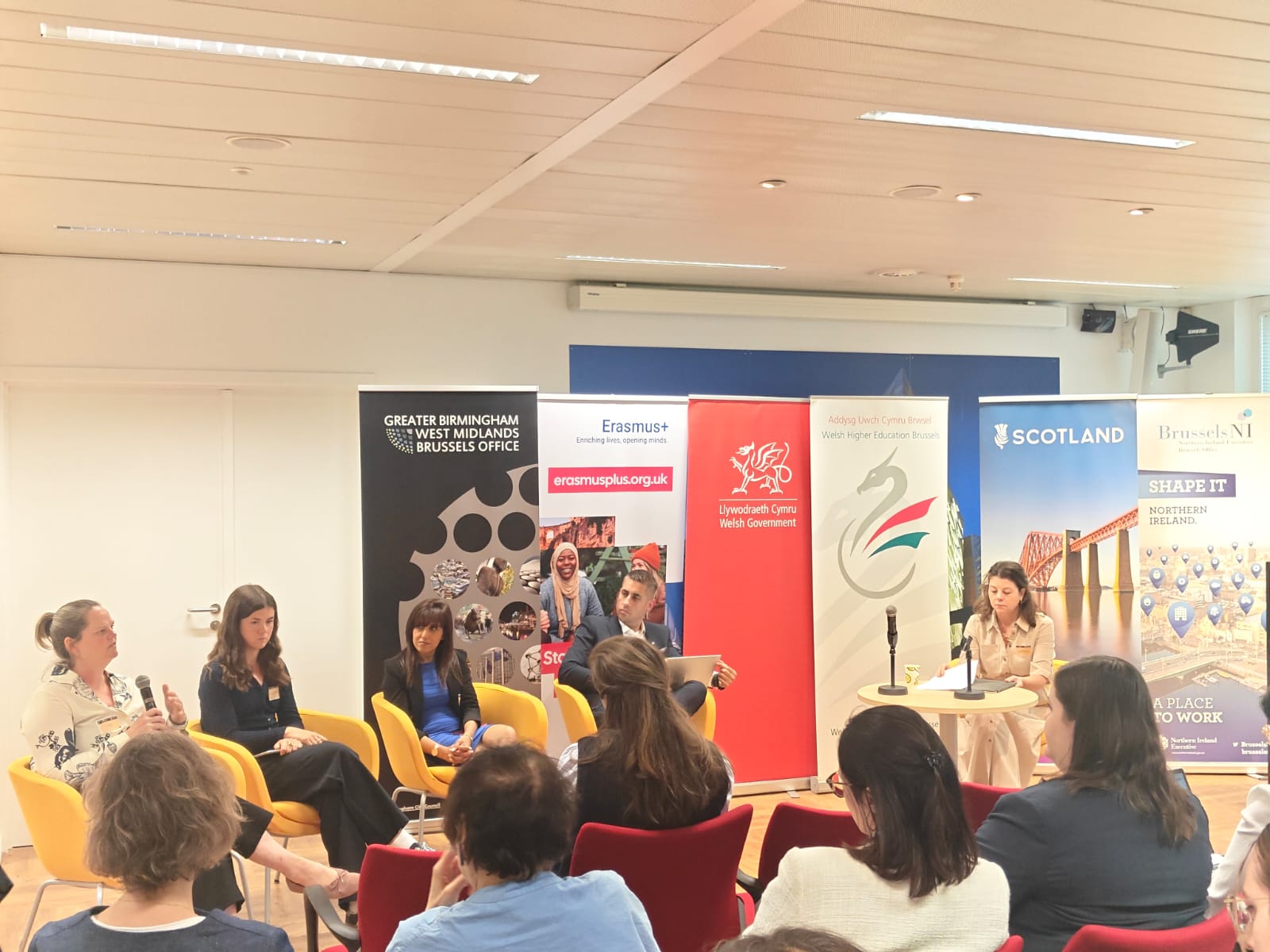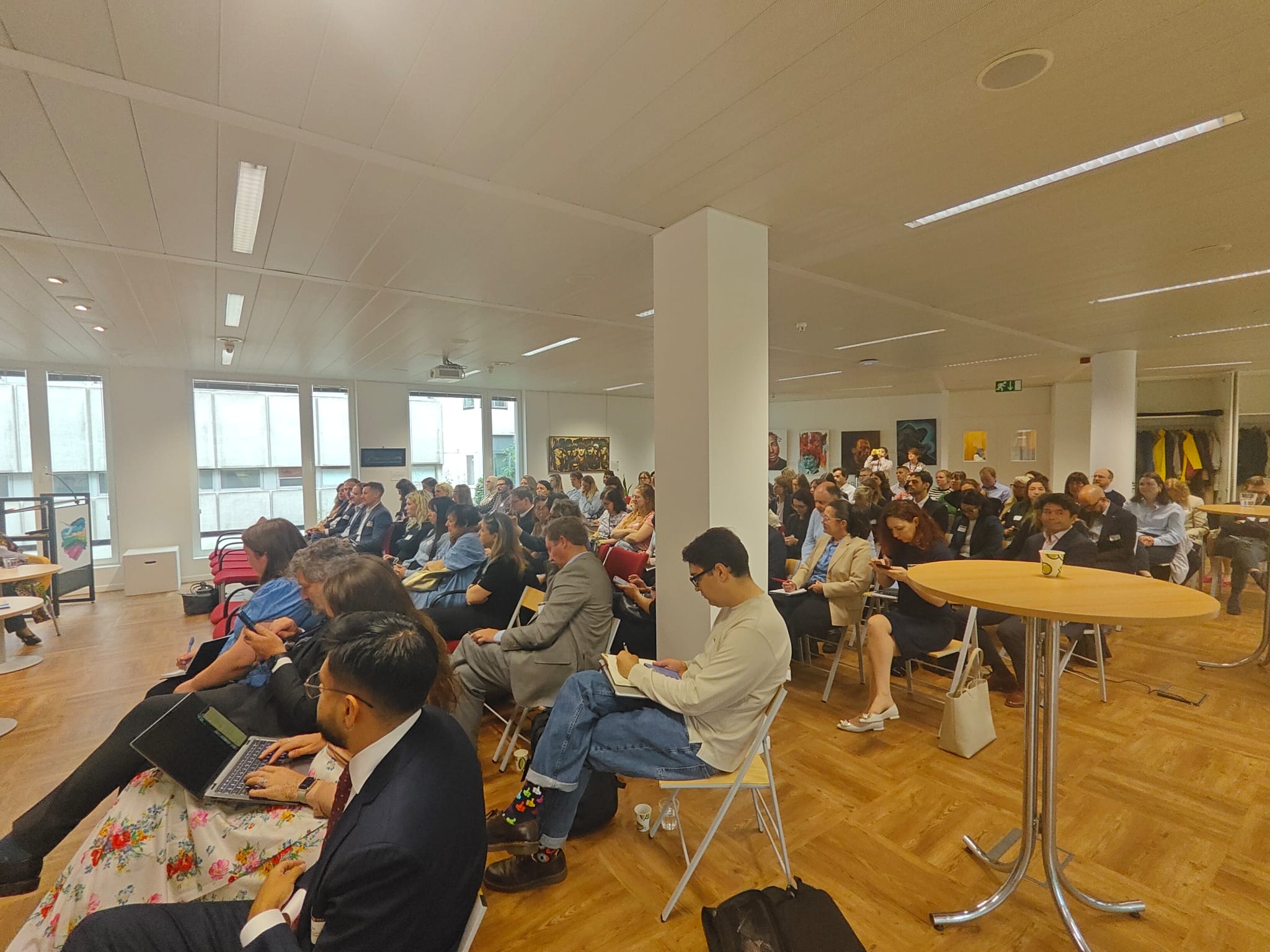
On 4th June, UK stakeholders gathered in Brussels for a day of sector discussions on what the UK’s return to Erasmus+ will mean in practice, for universities, schools, employers and the communities they serve.
Back at the table
Six weeks after the UK formally signed its association to Erasmus+, the conversation shifted from announcement to action. The British Council, as appointed National Agency for Erasmus+ decentralised actions, with support from the devolved government representation offices and other UK stakeholders in Brussels brought together more than a hundred practitioners, policymakers and education leaders in Brussels for an event entitled “New Partnerships with UK in Erasmus+”, a flagship event to tackle what participation will actually look like when the programme opens to UK applicants in 2027.
The Greater Birmingham & West Midlands Brussels Office was among the UK stakeholders supporting the event, alongside organisations from across England, Scotland, Wales and North Ireland. The presence of the region at a gathering of this scale reflects something the city has long understood: preparation matters, and the West Midlands should be ready.
A programme that has moved on
Erasmus+ as a programme has changed since the UK left. The doubled budget and increased scale of the instrument, new inclusion mechanisms, expanded support for vocational education and training (VET), and a stronger focus on disadvantaged groups mean that rejoining is not simply picking up where things left off. Panellists from the European Commission, the Netherlands’ Erasmus+ National Agency, Edinburg Napier University and Kent Invicta Chamber of Commerce were clear on this.
The enthusiasm from European partners is real. Numbers fell sharply after Brexit, but interest in UK participation has remained strong. Dutch representatives noted that the UK is still seen as a key partner for education and research. The potential is there, it just needs to be rebuilt.
The programme’s expected added value to addressing some of the current employment challenges and deliver on its economic potential was clearly highlighted by the speakers. Higher education and school partnerships are relatively well established, but adult education still has ground to make up, and reaching unemployed people and those from disadvantaged backgrounds was flagged as yet to be improved thank to E+ actions. With sector-specific pilots on the table, several speakers were direct: making Erasmus+ useful for employment and the labour market is one of the driving forces behind the UK participation.
What each sector is saying
Universities go into this with a clear head start, with established networks, prior Erasmus+ experience, and partnerships ready to build on. VET providers, schools and sport organisations have further to travel, but nothing in the room suggested that this would be a problem without a solution. The appetite is there, and attendees were confident these sectors will succeed in their objectives.
For sports bodies and youth organisations, that catching-up looks like building administrative capacity almost from scratch. Most are volunteer-led, without the administrative machinery built for a complex EU application process, and several flagged that pre-Brexit contacts and relationships won’t simply pick back up where they left off. But the room treated this as a design question rather than a dead end: how do you build a programme that smaller, less resourced organisations can actually use? That’s very much still open, and very much something the next year is meant to answer.
On the higher education side, Aston University’s Deputy Pro-Vice Chancellor for Research & Entreprise, Professor Shivani Sharma, who co-moderated and acted as rapporteur for the breakout group, reported strong appetite for double degrees and blended intensive programmes. University alliances with existing European ties are well-placed to move quickly, and the question is whether the first call in November 2026 will offer enough flexibility to bring in organisations that are starting from scratch. For Professor Sharma, that shift matters most as a long-term one: moving from one-off, project-based collaboration towards deeper, strategic partnerships is exactly what these alliances are designed to deliver.
Next steps
The British Council’s roadmap is ambitious: an awareness campaign this spring, systems and guidance in place over summer and applicant readiness support running into autumn. For organisations in Birmingham and the West Midlands, the message from Brussels was consistent: start building partnerships now, before the call opens. Identify European counterparts whose priorities align, think about what Erasmus+ is meant to achieve for your institution at a strategic level, and use the coming months to have those conversations.
Web design Adventure